


High protein snacks without fridge are shelf-stable foods (or packs) that deliver solid protein without needing refrigeration—perfect for commuting, travel days, or long work shifts. First, my rule of thumb is simple: aim for 10–25g protein per snack. Next, keep calories aligned with your goal. Finally, pair protein with fiber when possible. Because of this, you stay fuller longer and you’re less likely to “accidentally” eat three donuts from the break room (been there).
After one too many airport days where my only options were a muffin and regret, I started keeping a mini “protein stash” in my backpack. Interestingly, once you’ve got a few reliable picks, fat loss feels less like willpower and more like planning. Plus, you don’t need fancy stuff—just the right staples.
If you do use whey, it’s honestly the easiest “emergency snack” to keep in your desk or suitcase—just add water in a shaker. I’ve used basic whey protein powder for years because it’s predictable. You know the protein, you know the calories, and you’re done.
Before we get into the list, here’s a quick reality check: protein numbers vary by brand. So, I’m giving typical estimates you’ll see most often. Also, if you’re tracking fat loss, check the label for calories and added sugar. That’s where most “healthy snacks” get sneaky.
What are high protein snacks without fridge (and why they work for fat loss)?
High protein snacks without fridge are foods that hold up at room temp and still give you meaningful protein. In practice, they work for fat loss because protein increases fullness and helps preserve lean mass while dieting. Notably, higher-protein diets tend to improve appetite control for many people.
For a numbers-based anchor, a large meta-analysis found that higher protein intake can reduce body weight and fat mass while preserving lean mass (PubMed). Also, protein has a higher thermic effect than carbs or fat, meaning you burn more calories digesting it (NCBI).
Also, research from the International Food Information Council (IFIC) found that 71% of Americans are trying to limit or avoid sugars (2023 Food & Health Survey), which matters because a lot of “protein snacks” sneak sugar in (IFIC). Meanwhile, according to a 2024 survey by the International Council of Food Information, 65% of consumers said protein is a nutrient they’re trying to get more of—so you’re not alone in prioritizing it (IFIC).
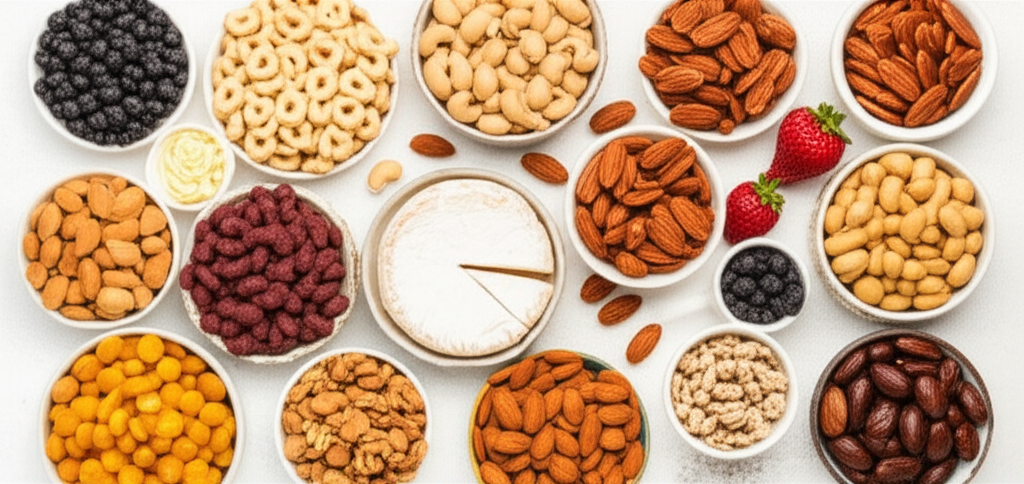
15 high-protein snacks you can keep at room temperature (with protein estimates)
Below are my go-to options. Some are grocery-store staples, while others are “gas station survivals.” Either way, you can build a legit plan around them.
1) Tuna pouch
Protein: ~16–20g per pouch. Calories: ~70–120. Specifically, look for flavored pouches if plain tuna makes you sad. Pair it with whole-grain crackers if you need more energy.
2) Salmon pouch
Protein: ~15–20g. Calories: ~90–150. Also, salmon gives you omega-3 fats, which is a nice bonus when your diet feels a bit “chicken and sadness.”
3) Chicken packet (or canned chicken with a pull tab)
Protein: ~15–22g. Calories: ~80–140. So, it’s one of the leanest, most filling options per calorie.
4) Beef jerky (watch the sugar)
Protein: ~9–14g per 1 oz. Calories: ~70–120. However, some brands are basically candy. I personally check added sugar first, then sodium.
5) Turkey jerky
Protein: ~10–14g per 1 oz. Calories: ~70–110. Similarly convenient, and it’s often a bit lower fat than beef jerky.
6) Meat sticks (beef/turkey)
Protein: ~6–10g per stick. Calories: ~80–120. Also, these are the easiest “checkout lane” protein when you’re stuck in a convenience store.
7) Roasted edamame (dry snack packs)
Protein: ~12–14g per serving. Calories: ~130–180. Notably, you also get fiber, which helps keep hunger quieter.
8) Roasted chickpeas
Protein: ~6–10g. Calories: ~110–160. Beyond that, they crunch like chips, which matters more than people admit.
9) Protein bar (choose wisely)
Protein: ~15–25g. Calories: ~180–280. Here’s the thing: some bars are basically dessert. Therefore, I look for 15g+ protein and at least a little fiber.
10) Ready-to-drink protein shake (shelf-stable)
Protein: ~20–30g. Calories: ~150–300. Also, these are clutch on travel days. I keep one in my carry-on, and it’s saved me more than once.
11) Protein powder single-serve packets
Protein: ~20–25g per packet. Calories: ~100–150. Mix it with water. If you can add coffee, even better (it tastes like a “normal person” drink).
12) Peanut butter packets
Protein: ~7–8g per 2 tbsp. Calories: ~180–200. However, calories add up fast. Pair one with fruit or rice cakes when you need a more complete snack.
13) Mixed nuts (single-serve packs)
Protein: ~5–7g per 1 oz. Calories: ~160–200. Besides being filling, they travel well. Still, portion control matters here.
14) Pumpkin seeds (pepitas)
Protein: ~8–9g per 1 oz. Calories: ~150–170. Interestingly, they’re also a decent magnesium source, which some active folks are low on.
15) Dry roasted soy nuts
Protein: ~12–14g per serving. Calories: ~130–170. That’s why, they’re one of the best plant-based choices when you want protein without a fridge.
Which picks are best for your calorie target?
Not everyone needs the same snack. So, here’s how I’d choose based on your daily calorie budget.
If you want ~100–150 calories
- Tuna pouch (often lands here)
- Turkey jerky (measure by ounces)
- Protein powder packet with water
- Salmon pouch (some flavors)
If you want ~150–250 calories
- Protein bar (look for 15–20g protein)
- Roasted edamame snack pack
- Ready-to-drink protein shake (lower-cal versions)
- Pumpkin seeds (pre-portioned)
If you want ~250–350 calories (more like a mini-meal)
- Protein shake + a piece of fruit
- Chicken packet + crackers
- Nuts + jerky combo (pre-portioned)
Also, if you’re in a fat-loss phase, I’d rather you pick one 250-cal snack that satisfies you than two 150-cal snacks that leave you prowling for more.
My grab-and-go shopping list (grocery + convenience store)
I keep this list on my phone. Therefore, when I’m tired and tempted to buy random stuff, I don’t have to think.
Grocery store staples
- Tuna/salmon/chicken pouches
- Jerky (lower sugar) and meat sticks
- Roasted edamame, soy nuts, roasted chickpeas
- Protein bars (buy a variety pack so you don’t get bored)
- Single-serve nut packs, pumpkin seeds
- Peanut butter packets
- Protein powder + single-serve packets or a small travel container
Convenience store “I’m stuck here” picks
- Meat sticks, jerky
- Protein bars
- Ready-to-drink protein shakes
- Single-serve nuts
Quick note: if you’re watching sodium, convenience-store protein can be salty. Meanwhile, if you’re active and sweating a lot, that salt may actually help you feel better. Ultimately, context matters.
How I pack high protein snacks without fridge for real life
I’m not precious about it. Instead, I use a simple system, and it keeps me consistent.
- Work bag: 1 protein bar, 1 tuna pouch, 1 nut pack (rotate weekly)
- Car: protein powder packet + shaker bottle (empty), plus jerky
- Travel: 2 protein bars + 1 shelf-stable shake (delays happen)
Also, I try to keep at least one option that’s low calorie (tuna pouch) and one that’s higher calorie (nuts) so I can match the day. Because of this, I’m less likely to “wing it.”
Do high-protein snacks help with fat loss, or is that hype?
They help—if you use them to control hunger and keep daily protein consistent. For example, research often cites protein’s role in satiety and body composition during weight loss, especially when calories drop (source). Also, the CDC notes that adult obesity prevalence in the U.S. is over 40%, which is a reminder that “random snacking” adds up fast (CDC data).
That said, calories still count. Therefore, I treat nuts and peanut butter like “measured tools,” not free foods. Jerky and tuna, on the other hand, are usually easier to fit in when you’re cutting.
My quick summary (so you can screenshot it)
High protein snacks without fridge are easiest when you build a small rotation: tuna or chicken pouches for lean protein, jerky or meat sticks for pure convenience, and a protein bar or shake for “no time, no options” moments. Also, match snack calories to your day—low-cal on desk days, higher-cal on travel or training days. If you want more label-reading help, you’ll find a solid primer on daily values and nutrients at the U.S. FDA.