


Walking speed fat loss comes down to the fastest pace you can repeat consistently without your joints hating you tomorrow. For most beginners, that’s usually 3.0–3.5 mph on flat ground, while intermediate walkers often do best around 3.5–4.0 mph (or a slightly slower pace with a small incline). Plus, use a quick talk test: if you can speak in short sentences but you wouldn’t want to sing, you’re in the sweet spot for fat loss.
I’ve tried the “just walk faster” advice and, honestly, it backfired the first time. Instead, my shins lit up, my form got sloppy, and I skipped sessions. So let’s do this the sane way: I’ll compare 2.5 vs 3.5 vs 4.0 mph, show you a simple pace-selection test, give calorie-burn ranges by body weight, and finish with a 4-week progression that increases speed without wrecking your knees.
One quick note from real life: adding a basic whey protein (I usually keep it simple—vanilla whey after walks) helped me hit my protein target on busy days. Also, if you’re shopping, the Amazon search above is an easy starting point.
what’s the best walking speed for fat loss?
The best pace is the one that keeps you in a moderate effort zone long enough to rack up weekly calories and steps. In practice, that’s often 3.0–3.5 mph for beginners and 3.5–4.0 mph for intermediate walkers, assuming you can hold it with good posture and minimal joint irritation. However, if you’re dealing with knee pain, a slightly slower speed with better form usually beats forcing 4.0 mph.
Also, “best” depends on how long you can stick with it. For example, a 20-minute suffer-fest at 4.0 mph you hate won’t outperform a 45-minute brisk walk you’ll actually do four times a week. Ultimately, consistency wins. Boring, but true.
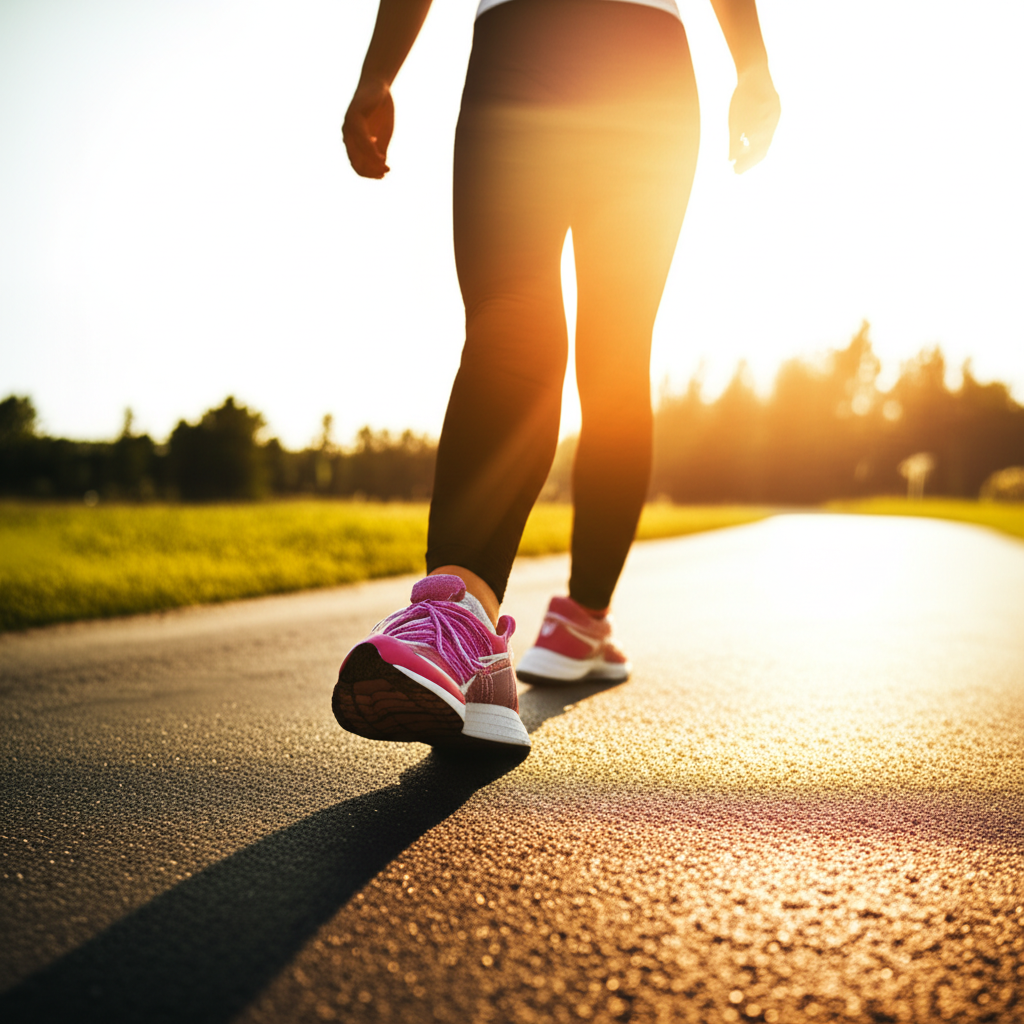
2.5 vs 3.5 vs 4.0 mph: what changes (besides your pride)?
Here’s how I think about these three speeds in the real world—treadmill and outdoors. Notably, the number on the treadmill is predictable, while outdoor pace changes with wind, hills, and sidewalks that are basically ankle traps.
2.5 mph: “easy walk” territory
2.5 mph is comfortable and joint-friendly. It’s great if you’re new, returning after time off, or you’re heavier and your knees need a gentler ramp-up. On top of that, it’s the pace where you can stack a lot of minutes without feeling cooked. The downside is simple: you’ll likely burn fewer calories per minute than at faster speeds.
3.5 mph: brisk, sustainable, and underrated
3.5 mph is where things start to feel like “training” without turning into a run. For many people, it hits that sweet spot where breathing is elevated, posture matters, and time passes faster. And, it’s usually sustainable 30–60 minutes once your legs adapt.
4.0 mph: fast walking that can get sketchy
4.0 mph is a legit workout. On the other hand, some people start overstriding, bouncing, and gripping the treadmill rails like they’re on a sinking ship. Because of this, joint pain can show up if your stride mechanics aren’t ready. If you can hold 4.0 mph with relaxed shoulders and a quick cadence, it’s excellent. If you can’t, don’t force it—yet.
A simple pace-selection test (talk test + RPE)
If you want one no-nonsense way to pick your pace today, use this combo:
- Talk test: You can speak in short sentences but you wouldn’t want to chat endlessly. If you can sing, speed up. If you can’t say more than a couple words, slow down.
- RPE (rate of perceived exertion) 1–10: Aim for 5–7 on most walks. That’s “working” but not suffering. Notably, you should finish feeling like you could do 10 more minutes if you had to.
This matters because the best pace for walking speed fat loss is the one that keeps you coming back. Besides, it’s the one you can progress without flare-ups.
How many calories do you burn at 2.5, 3.5, and 4.0 mph?
Calorie burn is messy in real life. For instance, your height, stride efficiency, incline, and even sleep can shift it. Still, we can estimate using MET values commonly used in exercise physiology. For walking, a widely used reference is the Compendium of Physical Activities. Plus, the CDC explains how activity intensity ties into health and weight management (CDC: Healthy Weight).
Estimated calories burned in 30 minutes (flat walking):
| Speed | 150 lb (68 kg) | 200 lb (91 kg) | 250 lb (113 kg) |
|---|---|---|---|
| 2.5 mph | 110–140 | 150–190 | 190–240 |
| 3.5 mph | 150–190 | 200–260 | 260–330 |
| 4.0 mph | 180–230 | 250–320 | 320–410 |
Two helpful reality checks:
- Longer often beats faster. For example, 45 minutes at 3.0–3.5 mph can out-burn 25 minutes at 4.0 mph, especially if the fast pace trashes your recovery.
- Small inclines are sneaky effective. A 2–5% incline can boost effort without forcing you into that awkward “almost jogging” gait.
Treadmill vs outdoor walking: does speed mean the same thing?
Nope. Outdoors, your pace is influenced by turns, terrain, and stoplights. On a treadmill, speed is fixed, which is great for progression. However, treadmill walking can feel slightly easier because there’s no wind resistance and the belt helps turnover a bit (even if you’re still doing the work).
If you walk outside and you’re trying to match treadmill numbers, use time-based goals instead of obsessing over perfect mph. Meanwhile, if you’re on a treadmill, keep a tiny incline (around 1%) to better mimic outdoor energy cost, a tip often discussed in running research and coaching circles.
How I’d pick your pace (so you don’t get shin splints)
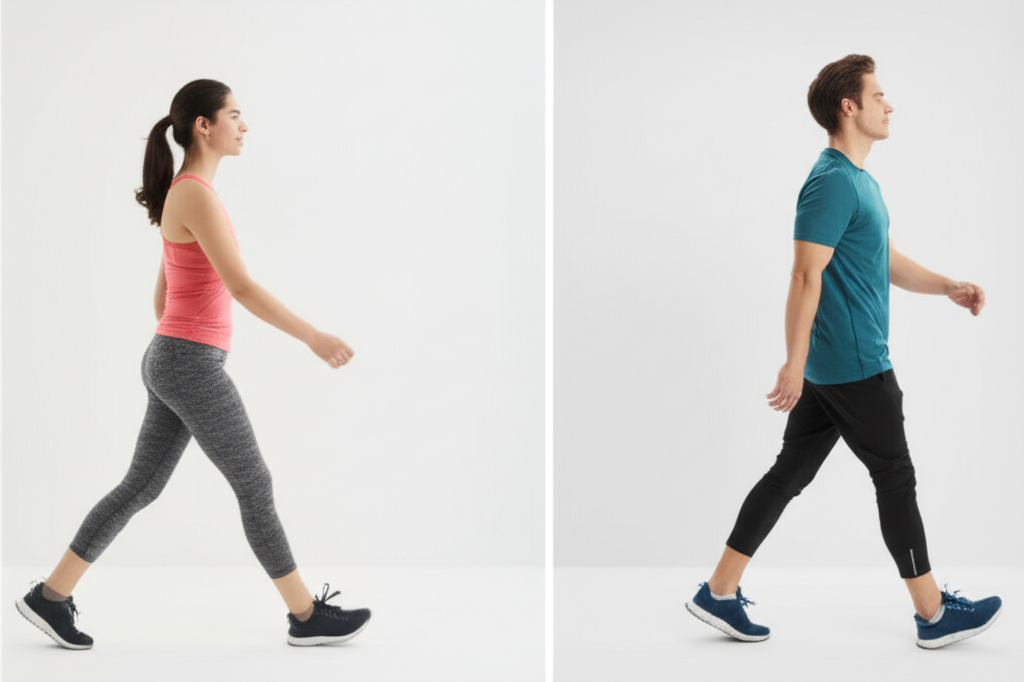
This is the part most posts skip, and it matters. Your “best” pace is tied to mechanics. Specifically, if you’re overstriding (foot landing way out in front), going faster can irritate shins and knees fast.
- Think quick steps, not long steps. Increase cadence a little before you crank speed.
- Keep posture tall. Slight forward lean from the ankles, not a hip hinge.
- Arms drive rhythm. If your arms are lazy, your legs usually follow.
If you’re unsure, film 10 seconds from the side. It’s mildly humbling. Plus, it’s effective.
4-week walking progression plan (speed up safely, protect your joints)
I like 4-week plans because they’re long enough for your tendons to adapt, yet short enough to stay motivated. Therefore, we’ll progress in small jumps. You’ll do 4 walks per week. If you already walk daily, keep your extra walks easy.
Week 1: set the baseline (comfort first)
- Walk 1: 30 min at 2.5–3.0 mph (RPE 4–5)
- Walk 2: 30 min at 3.0–3.3 mph (RPE 5–6)
- Walk 3: 35 min at 2.8–3.2 mph (RPE 5)
- Walk 4: 25 min “brisk blocks”: 5 min easy, then 5 x (2 min brisk / 2 min easy), cool down
Week 2: add time before you add ego
- Walk 1: 35 min steady at 3.0–3.4 mph
- Walk 2: 30 min with 6 x (2 min brisk / 2 min easy)
- Walk 3: 40 min easy-moderate at 2.8–3.3 mph
- Walk 4: 25–30 min brisk at 3.3–3.6 mph (only if talk test passes)
Week 3: introduce controlled 4.0 mph exposure
- Walk 1: 40 min steady at 3.1–3.5 mph
- Walk 2: 30 min intervals: 8 x (1 min at 3.8–4.0 mph / 2 min easy)
- Walk 3: 45 min easy at 2.8–3.2 mph
- Walk 4: 30 min brisk at 3.4–3.7 mph
Week 4: consolidate (the week most people skip)
- Walk 1: 45 min steady at 3.2–3.6 mph
- Walk 2: 32 min intervals: 6 x (2 min at 3.8–4.0 mph / 2 min easy)
- Walk 3: 45–55 min easy at 2.8–3.3 mph
- Walk 4: 30–35 min brisk at 3.5–3.8 mph
Pain rule (non-negotiable): If pain goes above a 3/10, or it changes your stride, back off for 3–7 days. Instead, swap one speed session for easy walking. So, you’ll keep momentum instead of having to “restart” every month.
Walking pace + fat-loss stats that matter (not just treadmill numbers)
If you like data, here are a few grounded points I keep in mind:
- Step volume works. A large study found that higher step counts were associated with lower mortality risk, with benefits rising up to around 8,000–10,000 steps/day for many adults (JAMA Network Open).
- More steps can meaningfully reduce risk. According to a 2024 analysis by The Lancet, people who increased daily steps saw risk reductions of about 15%–50% across several outcomes depending on baseline steps and endpoint (dose-response relationship).
- Adults don’t always hit activity targets. Research from the World Health Organization reports that roughly 31% of adults worldwide don’t meet recommended physical activity levels (reported in 2024 updates and summaries of global surveillance).
- Walking helps control weight over time. According to a 2024 report by CDC/NCHS, about 41.9% of U.S. adults have obesity, which is why simple, repeatable habits matter.
- A brisk walk often supports meaningful weekly burn. Research from ACSM summaries notes that regular moderate activity can contribute to clinically meaningful weight change, especially when it helps you sustain a calorie deficit.
- Weight loss is usually about energy balance. The NIH Body Weight Planner is a useful tool to estimate intake and activity changes needed for weight goals (NIDDK Body Weight Planner).
- Walking counts as moderate activity when it’s brisk. The CDC generally frames moderate intensity as being able to talk but not sing (CDC: Measuring Physical Activity Intensity).
So yes, speed matters. However, weekly minutes and recoverability matter more. That’s why I treat it as a repeatable system, not a one-time challenge.
What if you can’t hit 3.5 mph yet?
Then you don’t. Seriously. First, start where you’re and win the week. If 2.5 mph is your current “brisk,” use it and add time. After that, add tiny speed bumps: 0.1–0.2 mph at a time. Also, you can use incline (1–3%) as a progression tool if faster walking feels jarring.
A friend of mine lost a solid chunk of weight walking at what she called “grandma speed”… except she did it for an hour most days, didn’t miss, and slowly got faster. That’s not flashy. Still, it works.
Summary: the pace that burns fat is the one you’ll repeat
If you’re deciding between 2.5, 3.5, and 4.0 mph, here’s my take. First, start with the pace that passes the talk test, keeps you around RPE 5–7, and doesn’t trigger joint pain. Then progress slowly for four weeks. Over time, your best walking speed fat loss pace usually drifts upward naturally—without you forcing it.
[content-egg-block template=offers_list]