


Incline walking knee pain doesn’t have to be a “guess and hope” situation. Instead, the simplest fat-loss setup I’ve found is a moderate treadmill incline, a controlled pace, short strides, and a steady cadence—because that combo boosts heart rate without the pounding of running. Specifically, you’ll use 3–8% grade most days, keep your steps quick and light, and progress over 4 weeks without irritating the front of your knee.
I first leaned on incline walks after a little bout of cranky kneecaps from doing “one more” set of split squats (you know the type). However, once I stopped overstriding and quit cranking the incline like I was climbing Everest, my knees calmed down and my calorie burn stayed solid. Ultimately, you can get that same win—if you set the treadmill up like an adult and not like a dare.
One quick nutrition note (because fat loss isn’t just cardio): protein makes this plan work better. For example, I usually point people toward a basic whey protein powder if they struggle to hit protein at breakfast or after walking. What’s more, it’s a simple way to keep hunger from turning into a late-night pantry situation.
Before we get into the plan, here’s the big idea: incline walking increases the demand on your glutes and calves, so your heart rate rises at a lower speed. Therefore, you can keep impact lower than jogging while still nudging calories and conditioning in the right direction. For calorie context, Harvard Health lists a 155-lb person burning about 149 calories in 30 minutes walking at 3.5 mph on flat ground (and more if speed or incline rises). Source: Harvard Health.
On top of that, a large analysis from The Lancet Public Health reported that risk reductions for mortality plateau around 8,000 steps per day for adults (with benefits rising well below that). Because of this, you don’t have to crush brutal sessions to get meaningful returns—you just have to keep showing up.
Incline walking knee pain: What causes it (and what usually fixes it)?
Most complaints I see fall into a few buckets. First, people overstride—landing with the foot too far in front—so the knee takes a braking load every step. Next, they hang on the rails and lean back, which changes mechanics and can stress the front of the knee. Finally, they jump to steep grades too fast, which can aggravate patellofemoral pain (that classic “around/behind the kneecap” ache).
So what fixes it, practically? For starters, shorter steps, a slight forward lean from the ankles (not a hip hinge), and a grade that your knees tolerate today usually help. Interestingly, small tweaks beat heroic willpower here.
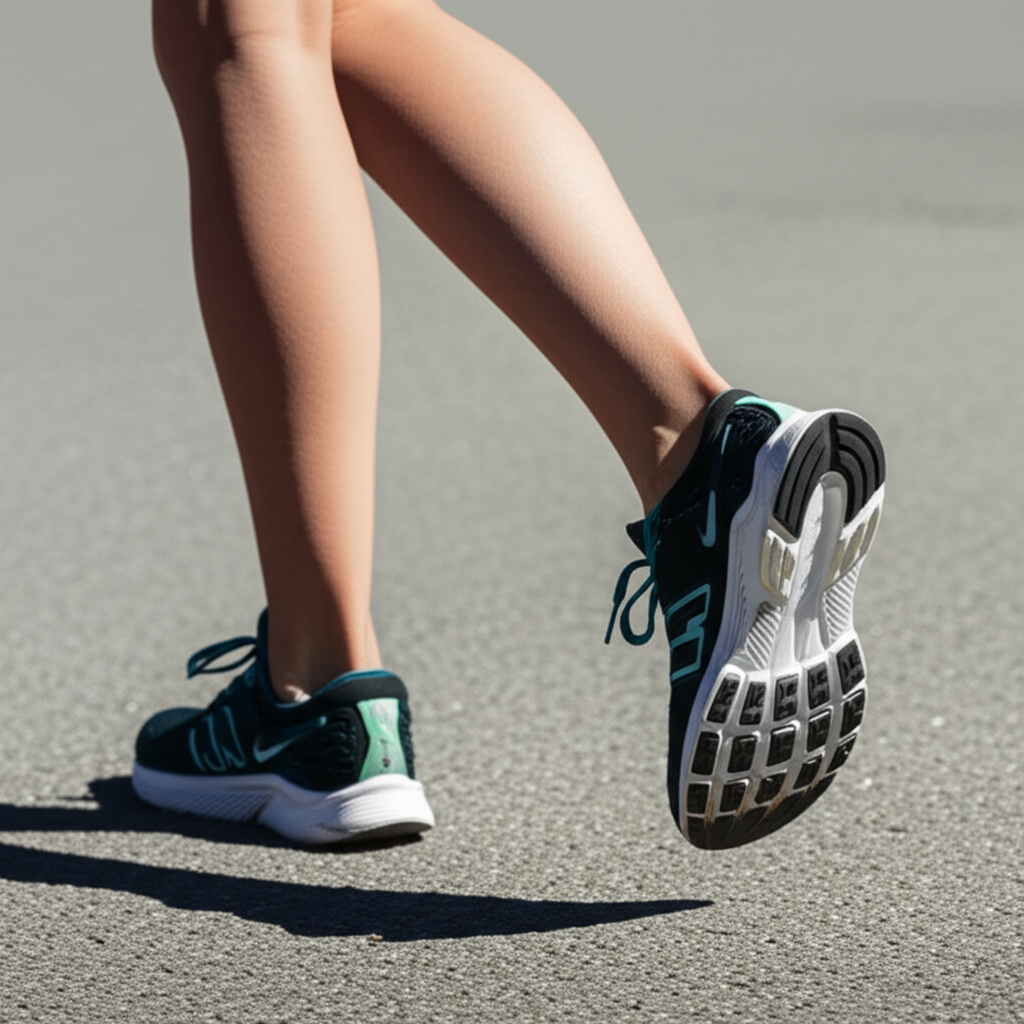
What treadmill settings should you use for fat loss without trashing your knees?
If your goal is fat loss while keeping joint stress reasonable, your best friend is moderate incline + moderate pace. In other words, don’t chase a huge grade if it changes your gait or lights up your kneecap.
- Grade (incline): Start at 3–5%. Cap most sessions at 8% until you’re confident your knee is fine.
- Speed: Usually 2.8–3.6 mph for many people. However, use a pace that lets you stay tall and keep quick, light steps.
- Hand support: Try not to hang on. If you need balance, lightly touch the rails, then wean off.
- Duration: 20–40 minutes is plenty, especially at first.
Also, watch the “ego settings.” For instance, if your heel is slamming, you’re bouncing, or your hips are swaying side to side, your speed is too high or your grade is too steep. Back it down. Even then, you’ll still get the conditioning effect.
Warm-up drills that actually help (3–6 minutes)
I’m not going to tell you to do a 20-minute mobility flow before a walk. You won’t. Instead, do this quick sequence that tends to make knees feel better fast:
- Easy flat walk: 2 minutes at 0–1% incline, comfortable pace.
- Ankle pumps + calf raises: 10 ankle pumps each side, then 10 slow calf raises holding the treadmill rails.
- Glute wake-up: 8–10 bodyweight hip hinges or very shallow squats (pain-free range only).
- Ramp set: 1 minute at 2–3% incline before your work sets start.
Meanwhile, if your knee is cranky that day, extend the easy flat walking portion. In that case, more warm-up is usually smarter than more incline.
Technique cues I use when this triggers pain
Here are the cues I repeat to myself when the front of my knee starts whispering complaints:
- Stride: “Shorter than you think.” Your foot should land under you, not way out front.
- Cadence: “Quick feet.” A slightly faster step rate often reduces joint stress because you’re not bounding.
- Posture: Tall ribs over pelvis. Slight forward lean from the ankles. Don’t fold at the hips.
- Foot pressure: Midfoot pressure with a smooth roll. Don’t stomp the heel.
- Arms: Let them swing naturally. If you death-grip the rails, your mechanics usually get weird.
Notably, knee comfort improves when you feel the effort shift to your glutes. If you feel it mostly in your quads and kneecaps, lower the grade, shorten your stride, and keep the torso tall. Then, you’ll usually feel things settle.
4-week incline walking plan (speed/grade ranges you can actually follow)
This plan is built for fat loss, not punishment. You’ll walk 4 days per week. On top of that, you’ll have options for “steady” days and “interval” days because some knees hate long continuous climbs, while others hate speed changes.
Intensity guide: Use a 1–10 effort scale. Most work should sit around 5–7/10. You should be breathing harder, but still able to speak in short sentences.
Week 1: Find the knee-friendly baseline
- Day 1 (steady): 20–25 min at 2.8–3.4 mph, 3–4% grade
- Day 2 (interval): 5 min easy, then 6 rounds: 2 min at 3–5% + 1 min at 1–2% (same speed), 5 min easy
- Day 3 (steady): 25–30 min at 2.8–3.4 mph, 3–5% grade
- Day 4 (easy recovery): 20 min at 0–2% grade, comfortable pace
Week 2: Add time first, not steepness
- Day 1 (steady): 30 min at 2.9–3.5 mph, 4–5% grade
- Day 2 (interval): 5 min easy, then 8 rounds: 90 sec at 5–6% + 90 sec at 2% (same speed), 5 min easy
- Day 3 (steady): 30–35 min at 2.9–3.5 mph, 4–6% grade
- Day 4 (easy recovery): 20–25 min at 0–2% grade
Week 3: Nudge the incline (carefully)
- Day 1 (steady): 35 min at 3.0–3.6 mph, 5–7% grade
- Day 2 (interval): 6 min easy, then 8 rounds: 1 min at 7–8% + 2 min at 3% (same speed), 5 min easy
- Day 3 (steady): 35–40 min at 3.0–3.6 mph, 5–7% grade
- Day 4 (easy recovery): 25 min at 0–2% grade
Week 4: Hold good form under a bit more demand
- Day 1 (steady): 40 min at 3.0–3.7 mph, 6–8% grade
- Day 2 (interval): 6 min easy, then 10 rounds: 1 min at 8% + 1 min at 3–4% (same speed), 5 min easy
- Day 3 (steady): 35–45 min at 3.0–3.7 mph, 6–8% grade
- Day 4 (easy recovery): 25–30 min at 0–2% grade
Progress rule (important): if pain during the walk rises above a mild discomfort (or lingers worse the next morning), repeat the previous week or reduce incline by 1–2%. Because of this, you’ll build fitness without building inflammation. In other words, you won’t have to “push through” stuff you shouldn’t.
What if you’ve patellofemoral pain specifically?
Patellofemoral pain (PFP) tends to hate compressive knee load at deeper angles. Inclines can increase that load if your stride gets long or you lean wrong. Therefore, you’ll want to keep the knee angle friendlier and shift more work to your hips.
- Use smaller inclines more often: 2–5% is plenty.
- Keep steps short: If your knee travels far forward, shorten stride and increase cadence a touch.
- Try interval inclines: Alternate 2 minutes at 4–5% with 2 minutes at 1–2%.
- Skip steep hills when flared: If your kneecap feels “hot” or sharp, go flat that day.
Also, strengthening matters. The Journal of Orthopaedic & Sports Physical Therapy clinical practice guidance supports exercise therapy as a key treatment for PFP. That’s fancy wording for: you’ll likely do better if you pair walking with simple leg strength work (pain-free range). If you want a practical starting point, the American College of Sports Medicine (ACSM) also outlines general weekly activity recommendations you can build around.
According to a 2024 survey by the Sleep Foundation, 28% of adults reported getting too little sleep on weekdays. As a result, recovery can lag even when training looks “perfect” on paper—so don’t ignore sleep if your knees won’t calm down.
Plus, research from the CDC’s National Center for Health Statistics (2024 reporting) shows that about 22% of U.S. adults meet both aerobic and muscle-strengthening guidelines. Therefore, if you’re walking consistently and lifting even a little, you’re already doing what many people don’t.
Meanwhile, according to a 2024 study by the World Health Organization (WHO), physical inactivity links to a substantial health burden, and global estimates still show roughly 31% of adults don’t meet recommended activity levels. Because of this, the most “effective” plan is the one you’ll actually stick to.
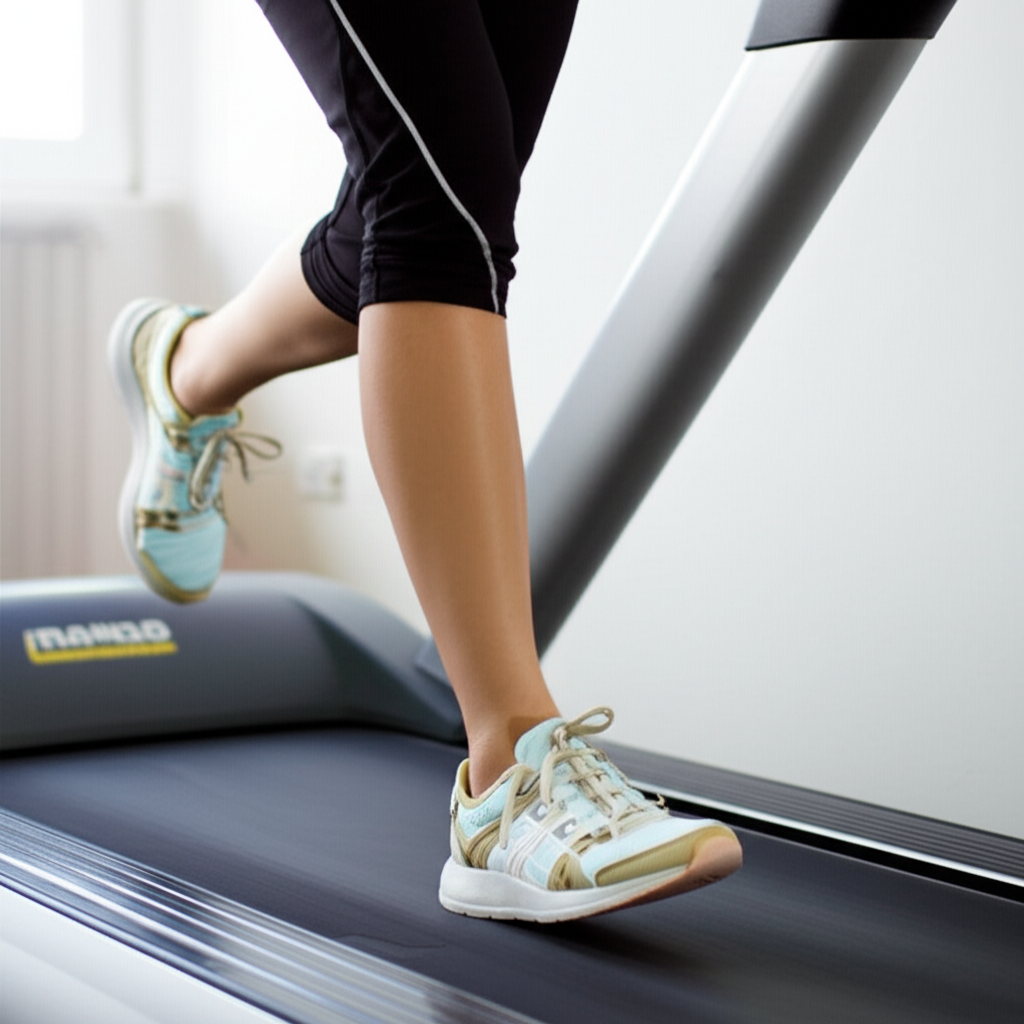
When should you avoid incline walking altogether?
I’m all for “move what you can,” but there are days when incline is a no. Avoid incline work (at least temporarily) if:
- you’ve sharp pain with each step, or pain that forces you to limp.
- Your knee is swollen, warm, or significantly more stiff the next day.
- You recently had an acute injury (twist, pop, fall) and haven’t been assessed.
- Your pain escalates during the session and doesn’t settle when you drop to 0–1% grade.
If you’re unsure, get checked by a licensed clinician. Meanwhile, flat walking, cycling with low resistance, or pool walking often keeps conditioning up without poking the bear. In the same way, a brief deload week can help you come back stronger.
Fat loss expectations (and two stats I think you should know)
If you’re doing this for weight loss, expectations matter. Walking is underrated, but it isn’t magic. Instead, it’s consistent, repeatable work that doesn’t wreck recovery. Plus, it stacks well with strength training.
- The CDC notes that losing 5–10% of your body weight can improve blood pressure, cholesterol, and blood sugar. That’s a practical target that doesn’t require you to live on lettuce. Source: CDC.
- For activity volume, the CDC recommends at least 150 minutes a week of moderate-intensity aerobic activity for adults. Accordingly, your walking plan can cover a big chunk of that. Source: CDC Physical Activity Guidelines.
Therefore, if you hit 4 incline sessions weekly and keep food boringly consistent, you’re doing the unsexy stuff that works. Plus, you’ll get better at it fast.
Optional add-on: a simple program if you want the full “plan” vibe
Some people love DIY. Others do better when someone hands them a structure and says, “Do this on Monday.” If you’re in that second group, this is one program-style option I’ve seen readers stick with because it removes decision fatigue. Plus, it keeps you from guessing when motivation dips.
My quick checklist for calmer knees on inclines
- Keep the incline moderate (most sessions 3–8%).
- Shorten stride and keep steps quiet.
- Stand tall; don’t hang on the rails.
- Progress time first, then incline.
- If symptoms spike, go flatter and treat that as a win, not a failure.
Summary: This approach works because it raises heart rate with less impact, while the technique cues (short stride, quick cadence, tall posture) reduce front-of-knee stress. Overall, follow the 4-week progression, keep most grades moderate, and use intervals or flat walking when your kneecap gets fussy. Consistency beats hero workouts here—every single time.
[content-egg-block template=offers_list]