


Here’s the deal: a resistance band workout can absolutely torch calories in a small apartment—no jumping, no treadmill, no bulky gear. Below is my go-to 15-minute, follow-along style circuit with a quick warm-up, three workout options (beginner and intermediate), plus a cooldown. And, I’m giving you a simple weekly schedule, band tension tips, and progression rules (reps, tempo, rest) so you keep seeing changes instead of stalling.
I started relying on bands when I lived in a shoebox studio and my downstairs neighbor would bang the ceiling if I even looked like I might do burpees. Honestly, bands saved my training consistency. Plus, they’re quiet, joint-friendly, and they can still hit that “wow, I’m sweating” zone fast—especially if you keep rest tight and use the right tempo.
If you don’t already have a set, I’d grab a resistance bands set with multiple tensions and a door anchor (that anchor is the difference between “meh” and “this is legit”). However, don’t overthink it—one medium band can get you started today.
what’s a resistance band workout (and why it works for fat loss)?
A resistance band workout uses elastic tension to load your muscles through a range of motion. Because bands create continuous tension, they can make basic moves feel sneaky-hard. That’s why, you can build muscle endurance and keep your heart rate up without pounding your joints.
Fat loss still comes down to a calorie deficit. Still, resistance training helps you keep muscle while you diet. Notably, the CDC recommends adults do muscle-strengthening activity at least 2 days per week for health benefits. Source: CDC physical activity guidelines.
And, a 2024 WHO fact sheet reports that 31% of adults worldwide are insufficiently active. That stat matters because short, low-impact circuits make it easier to stick with training. Source: World Health Organization (Physical activity).
Meanwhile, research from the American College of Sports Medicine notes that resistance training can reduce body fat by about ~1.5% on average in adults, even without major dietary changes in some studies. According to a 2024 evidence review summary referenced in ACSM education materials, the effect is modest but consistent when people stick with it.
Also, a survey by Statista (2024) found that 45% of exercisers say they prefer workouts that can be done at home. That’s why apartment-friendly training matters: if it’s easy to start, you’ll do it more often.
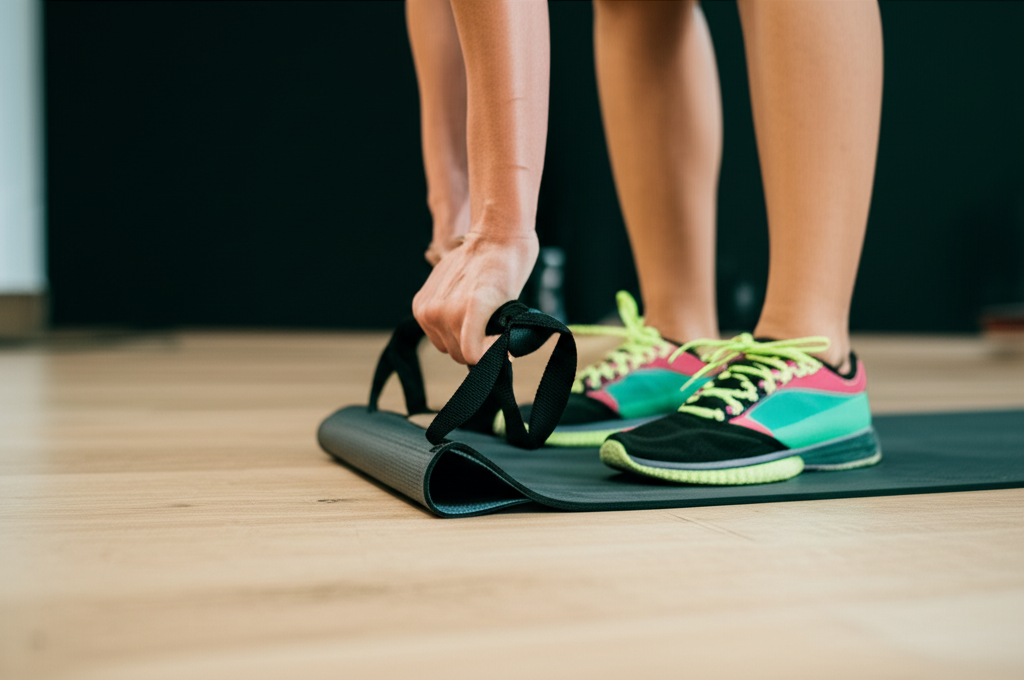
How tight should the band be for this session?
This is where most people mess up. First, they either use a band that’s too light and fly through reps, or they go too heavy and their form turns into modern art. Next, use this practical rule:
- Beginner: You should have 2–3 reps left in the tank at the end of each set.
- Intermediate: You should have 0–2 reps left at the end of each set (hard, but clean).
- Band setup cue: Step wider or choke up on the band until the last 3 reps slow down.
Also, aim for steady breathing. If you’re holding your breath and turning purple, back off. Meanwhile, if you can chat easily through every set, increase tension or tempo.
15-minute warm-up (3 minutes)
First, do these back-to-back. Next, keep it smooth. Ultimately, you’re not trying to win the warm-up.
- March in place + arm swings: 45 seconds
- Hip hinge drill (hands on hips, push hips back): 45 seconds
- Band pull-aparts (light tension): 10–15 reps
- Bodyweight squat to stand (slow): 6–8 reps
The 15-minute band circuit (no jumping)
You’ll do 6 moves in a circuit. Choose your option below. What’s more, keep a phone timer going so you don’t “accidentally” rest for two minutes.
Exercise list (all options use the same 6 moves)
- Banded Squat (stand on band, handles/ends at shoulders)
- Banded Row (anchor at door or loop around sturdy object)
- Banded Romanian Deadlift (stand on band, hinge at hips)
- Banded Chest Press (door anchor behind you)
- Banded Lateral Walk (mini band above knees or ankles)
- Dead Bug (band-assisted optional) (core control, slow)
Option A: Beginner (15 minutes total)
- Work: 30 seconds each move
- Rest: 20 seconds between moves
- Rounds: 2 rounds
Option B: Beginner/Intermediate (15 minutes total)
- Work: 35 seconds each move
- Rest: 15 seconds between moves
- Rounds: 2 rounds
Option C: Intermediate (15 minutes total)
- Work: 40 seconds each move
- Rest: 10 seconds between moves
- Rounds: 2 rounds
Form note: If your technique breaks down, you’re not “pushing harder,” you’re practicing bad reps. Therefore, lower tension or slow the pace before you cheat the movement.
My tempo and rest rules (this is how you keep progressing)
When people tell me “bands don’t work,” it’s usually because they’re blasting through reps with zero control. Instead, tempo fixes that.
- Default tempo: 2 seconds down, 1 second up (controlled, not robotic).
- Progression #1 (best): Add 5 seconds of work time per move before adding more rounds.
- Progression #2: Add tension by stepping wider, choking up the band, or using the next band up.
- Progression #3: Reduce rest by 5 seconds once you can keep clean reps.
Also, use a simple “talk test.” If you can’t say a short sentence during rest, you’re going too hard for a sustainable fat-loss plan. Conversely, if you recover instantly, tighten the screws.
How many days per week should you do this routine?
I like this schedule because it’s realistic. No “train 6 days a week” fantasy. On top of that, it fits apartment life.
- Week plan (simple):
- Mon: Circuit (Option A/B/C)
- Tue: 20–40 min brisk walk
- Wed: Circuit (Option A/B/C)
- Thu: Mobility + light walk
- Fri: Circuit (Option A/B/C)
- Sat: Optional walk or easy bike
- Sun: Rest
For cardio, you don’t need anything fancy. In fact, a meta-analysis found that a common public-health target of ~10,000 steps/day is associated with lower mortality risk, with benefits increasing up to a point. Source: JAMA Network Open (steps and mortality). That’s not “fat loss proof” by itself, but it’s a solid behavior anchor.
Also, a 2024 ACSM survey found that 73% of respondents say “lack of time” is a top barrier to regular exercise. That’s exactly why this 15-minute setup works so well when you’re busy. Source: American College of Sports Medicine (resources).
Cooldown (2–3 minutes) to feel better tomorrow
Don’t skip this if you’re the kind of person who gets tight hips and cranky shoulders (so… most of us). Instead, keep breathing slow.
- Child’s pose with side reach: 30 seconds each side
- Hip flexor stretch: 30 seconds each side
- Chest doorway stretch: 30 seconds each side
- Box breathing: 4 breaths (4 seconds in, hold 4, out 4, hold 4)
Common mistakes I see (and how to fix them fast)
I’ve coached enough friends and family over FaceTime to spot patterns. So, these are the big ones.
- Band snaps back with no control: Slow the eccentric (the lowering). What’s more, shorten the range until you can control it.
- Squats turn into a good-morning: Bring feet slightly wider and think “sit between my heels.”
- Rows hit biceps more than back: Lead with elbows and pause 1 second at the squeeze.
- Too much too soon: Start with Option A for one week. Then progress. Consistency beats hero workouts.
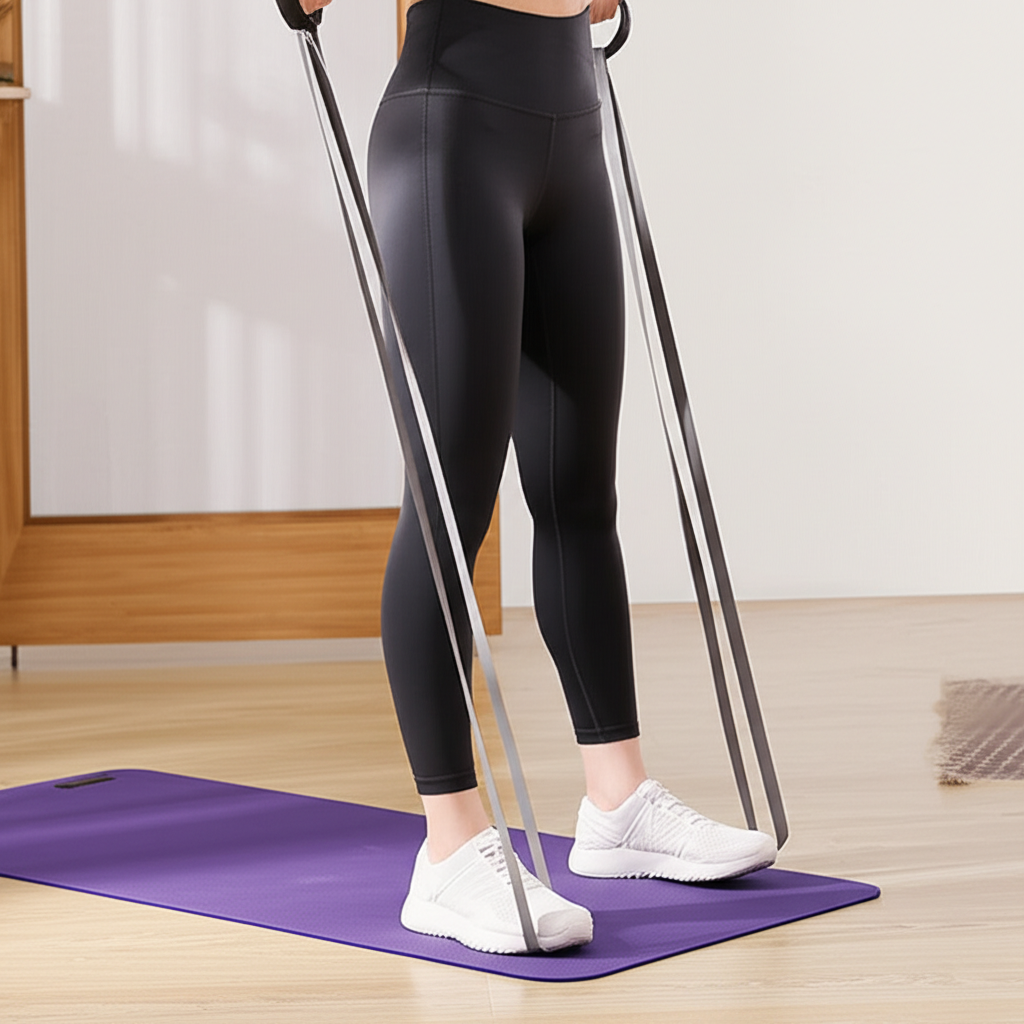
What results can you realistically expect?
If you do this plan 3 days a week, keep your walks consistent, and clean up the obvious diet landmines (liquid calories, random snacks, weekend “whatever”), you’ll usually notice better stamina within 2 weeks. Visible body changes often show up around weeks 4–8. Plus, strength gains happen faster than scale changes, so track reps and band tension.
On the nutrition side, a safe, commonly recommended rate of weight loss is about 1–2 pounds per week for many people, depending on your starting point and plan adherence. Source: CDC healthy weight loss guidance. Also, you’ll stick with it longer if you don’t chase extremes.
Quick tip before you press play: pick your option (A, B, or C) before you start. Otherwise, you’ll bargain with yourself mid-workout. I’ve done that, and it doesn’t end well.
Summary (save this and follow it)
This resistance band workout is built for small spaces and real life: warm up for 3 minutes, run the 6-move circuit for 15 minutes using Option A/B/C, then cool down for 2–3 minutes. Next, progress by adding work time, then tension, then trimming rest. Finally, do it 3x weekly, walk on off days, and keep your nutrition boringly consistent.
[content-egg-block template=offers_list]