


Low impact jump rope alternative is basically “jump rope cardio” without the actual jumping—so you still get the heart-rate spike, coordination work, and calorie burn, but with far less pounding on your knees (and less noise for your downstairs neighbors). Below, I’m giving you my go-to 20-minute interval plan, plus a warm-up, cool-down, intensity options, and a simple 4-week progression so you know exactly what to do next.
I first started using this style of workout during a phase when my knees were cranky and I was living in a thin-walled apartment. Honestly, I missed jump rope… but I didn’t miss the shin splints or the “thud-thud-thud” complaints. This routine scratches the same itch: fast feet, timing, sweaty lungs, and that satisfying “I did something” feeling in under half an hour.
Quick nutrition side note (because people always ask): if you’re doing cardio for fat loss, protein helps a lot with staying full and keeping muscle while you cut calories. A simple whey protein powder is the easiest “I can actually stick with this” option I’ve used—especially after a session like this when I’m hungry and tired.
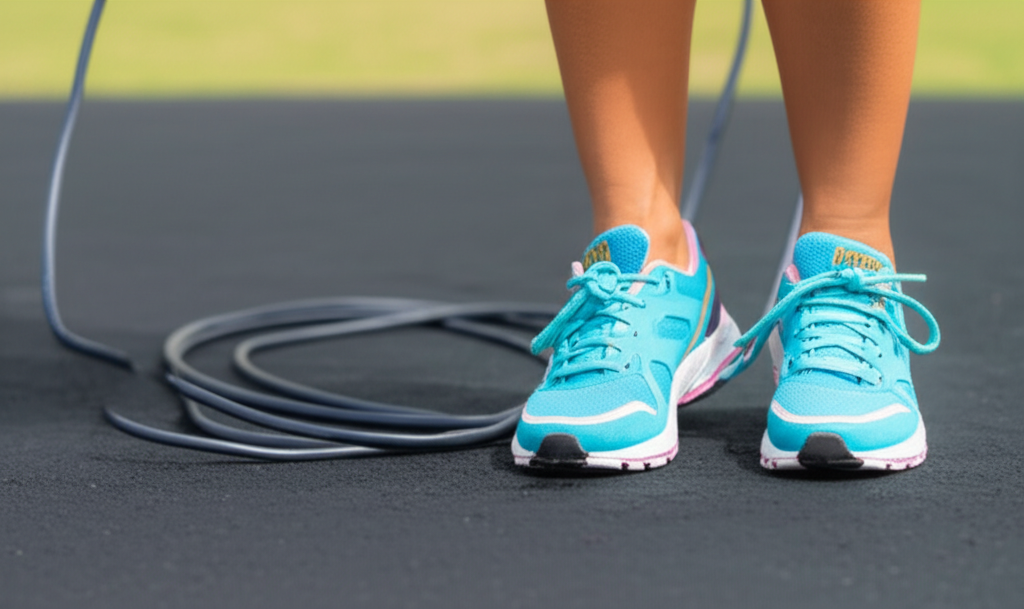
Also, you don’t need fancy gear. However, I do recommend shoes with a stable base (not squishy marshmallow soles), and if you’ve got knee pain, consider working on a softer surface like a yoga mat or a thin rug. Besides being quieter, it often feels better on joints.
what’s a low impact jump rope alternative (and why it works)?
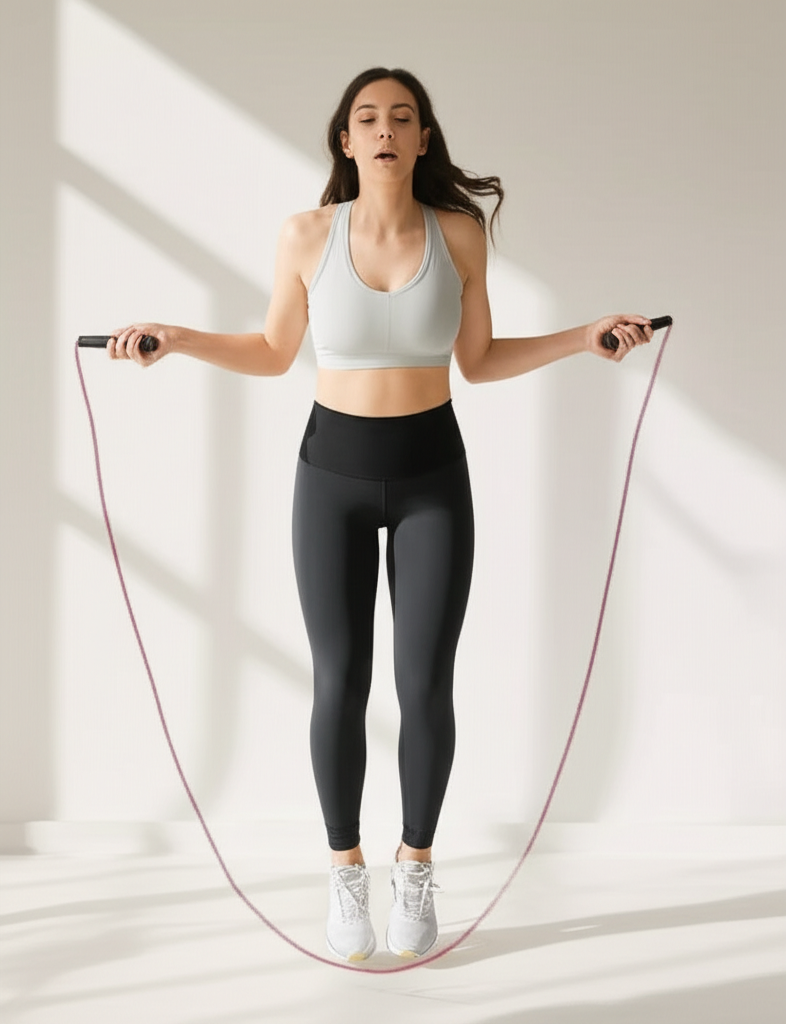
Think of this as jump rope footwork + arm rhythm + intervals, minus the impact. You’ll use quick steps, side-to-side patterns, and “ghost rope” arm circles to mimic the coordination and pacing of real rope work. So, you can still hit moderate-to-vigorous intensity, which is where fat-loss cardio tends to shine.
For context, the CDC recommends adults aim for 150 minutes of moderate-intensity activity (or 75 minutes vigorous) weekly, plus strength work. This workout helps you rack up those minutes without needing a treadmill—or making enemies of your neighbors.
Can you burn fat without jumping? Yes—here’s the honest answer
Fat loss mostly comes down to consistency and a calorie deficit, not whether your feet leave the floor. In fact, studies routinely show that accumulating moderate-to-vigorous activity supports weight management, especially when paired with sensible eating. On top of that, low-impact options can be easier to repeat, which is the whole game.
One number I like people to remember: a step rate of around 100 steps per minute is often used as a practical marker for moderate intensity walking in adults (it’s a rule-of-thumb, not a law of physics). That’s from research summarized by PubMed. This routine frequently pushes you above that “moderate” feel—without pounding.
Also, if you want a simple calorie reality check, Harvard’s chart of estimated calories burned for different activities is a handy reference point (even though individual results vary). Here’s the resource: Harvard Health Publishing.
20-minute low impact jump rope alternative interval routine
This is the exact structure I use when I want the “jump rope vibe” without the drama. Set a timer for 40 seconds work, 20 seconds easy. You’ll do 10 moves, twice (that’s 20 minutes total). Meanwhile, keep your arms involved—circle them like you’re turning a rope. It sounds silly until your shoulders and lungs tell you it’s not.
Your intensity targets (simple and practical)
- Easy rounds: You can talk in full sentences.
- Work rounds: You can say a short phrase, but you don’t want to chat.
- Form rule: Quiet feet, soft knees, tall posture. If you get loud, slow down.
Round A (10 minutes)
- Boxer step (no hop): Shift weight right-left-right-left, heels barely lift.
- Fast feet march: Quick marching in place, arms circling.
- Side-to-side skaters (low): Step wide, tap, step wide, tap (no jumping).
- Front-back toe taps: Tap one foot forward, then back, switch sides.
- Alternating knee drives (low): Lift knee to hip height if comfy; otherwise lower.
- Step jacks: Step out-in like a jumping jack, arms overhead.
- Diagonal step + reach: Step diagonally and reach across body, switch.
- Speed shuffle (tiny): Micro-steps, quick cadence, stay light.
- Heel digs + arm circles: Dig heel forward, alternate.
- Shadow rope sprint: Your fastest quiet feet of the round.
Round B (repeat the same 10 moves)
Do the list again. Interestingly, Round B always feels harder even though it’s identical. That’s normal. Therefore, aim for slightly smaller steps instead of quitting the rhythm.
Warm-up (4 minutes) that keeps knees happy
Don’t skip this. The first time I tried to “save time” and jumped straight into fast feet, my knees reminded me the next day. Do each for 40 seconds, moving smoothly:
- Ankle rolls + toe lifts: Wake up feet and ankles.
- March in place: Gradually increase pace.
- Hip hinges (hands on hips): Light posterior-chain activation.
- Step jacks (slow): Practice the pattern before speed.
- Arm circles: Forward then backward, easy shoulders.
- Breathing reset: Two big nasal inhales, long exhales.
Cool-down (4 minutes) to come down without feeling dizzy
After intervals, your heart rate drops fast if you stop cold. Instead, taper it down. First, walk in place for 60–90 seconds. Then:
- Calf stretch: 30 seconds per side.
- Quad stretch or couch stretch: 30 seconds per side.
- Figure-4 glute stretch: 30 seconds per side.
- Chest opener: Hands clasped behind back, 30 seconds.
- Box breathing: 4 seconds in, 4 hold, 4 out, 4 hold (x3).
How to modify intensity (without turning it into a totally different workout)
Here’s the thing: most people only know “go harder” by moving bigger. That often means more impact. Instead, use these knobs:
- Cadence: Faster feet, same small steps (quiet is the goal).
- Arm speed: Faster “rope turns” raises heart rate surprisingly fast.
- Range of motion: Keep it small for knees; keep it larger for challenge.
- Work/rest tweak: 45/15 is spicier than 40/20.
- Posture: Stay tall—slouching makes you gas out early.
If you’re dealing with knee pain, I’d also avoid deep knee bends during fatigue. What’s more, keep your steps under your hips instead of reaching far out. Small changes, big difference.
4-week progression schedule (simple, realistic, repeatable)
You don’t need a complicated plan. You need one you’ll actually do when work is annoying and motivation is low. So here’s what I recommend—three workouts per week, plus walking and basic strength training if you can.
Week 1: Learn the patterns
- 3 sessions of the 20-minute routine
- Keep steps small and quiet
- Rate effort: 6/10
Week 2: Add pace (not impact)
- 3 sessions
- Increase cadence on “Shadow rope sprint” and “Speed shuffle”
- Rate effort: 7/10
Week 3: Nudge intervals
- 3 sessions
- Switch timer to 45s work / 15s easy
- Rate effort: 7–8/10
Week 4: Add one “bonus” finisher
- 3 sessions
- Keep 45/15, then add 2 minutes: 20s fast feet + 10s easy x4
- Rate effort: 8/10
Notably, if your sleep is trash or your knees flare up, regress without guilt. Swap back to 40/20 or reduce step size. Consistency beats hero workouts.
Common mistakes I see (and how to fix them fast)
- Too much bounce: Keep one foot on the floor most of the time; think “shuffle,” not “jump.”
- Stomping: Land softly; if it’s loud, it’s too much force.
- Arms doing nothing: Add rope-turn circles—your heart rate will climb.
- Going all-out too early: First 2 minutes should feel easy; then build.
- No strength training: Even two short sessions weekly helps knees and results.
Want extra structure? Here’s a program-style option
If you’re the type who does better when someone else tells you what to do each day (I get it—I’m like that sometimes), a guided fitness plan can keep you consistent. That’s why I’m sharing the program link below; it’s a “follow along” style approach rather than you piecing everything together yourself.
Follow-along video (use it when you don’t want to think)
Some days you’ll be motivated. Other days you’ll want autopilot. On those days, pull up a video, hit play, and just match the timing. This one fits the vibe of a low-impact, apartment-friendly cardio session:
Quick summary (save this)
This low impact jump rope alternative gives you the conditioning feel of rope work without the jumps: 20 minutes of 40/20 intervals (or 45/15 later), plus a short warm-up and cool-down to keep your joints happier. Progress it over four weeks by increasing cadence and work time, not by pounding harder. Keep steps quiet, arms active, and intensity honest.
Frequently Asked Questions
Is a low impact jump rope alternative good for knee pain?
It can be, because you’re removing repeated jumping and landing forces. However, knee pain has many causes. Keep steps small, avoid deep bends during fatigue, and stop if pain spikes sharply. If symptoms persist, get a clinician’s guidance for your specific issue.
How many times a week should I do this routine for fat loss?
Start with three sessions per week and stay consistent for four weeks. What’s more, aim for daily walking and two short strength sessions weekly to support joints and muscle. Fat loss still depends on nutrition, so pair workouts with a reasonable calorie deficit.
Will this replace real jump rope conditioning?
It won’t perfectly replace the exact skill and impact tolerance of real rope work. Still, it builds aerobic fitness, foot speed, and coordination in a similar way. Therefore, it’s a great bridge if you’re rebuilding your base or training quietly indoors.
What if I live in an apartment with thin floors?
Use a yoga mat or thin rug, keep your steps under your hips, and focus on “quiet feet.” Also, avoid stomping and big lateral reaches. If you’re still loud, reduce cadence slightly and increase arm speed instead to keep intensity up.
Do I need equipment for this workout?
No equipment is required. Supportive shoes help, and a mat can reduce noise and joint stress. If you want a simple add-on for recovery, many people use whey protein powder after workouts to hit protein goals more easily, especially during fat-loss phases.